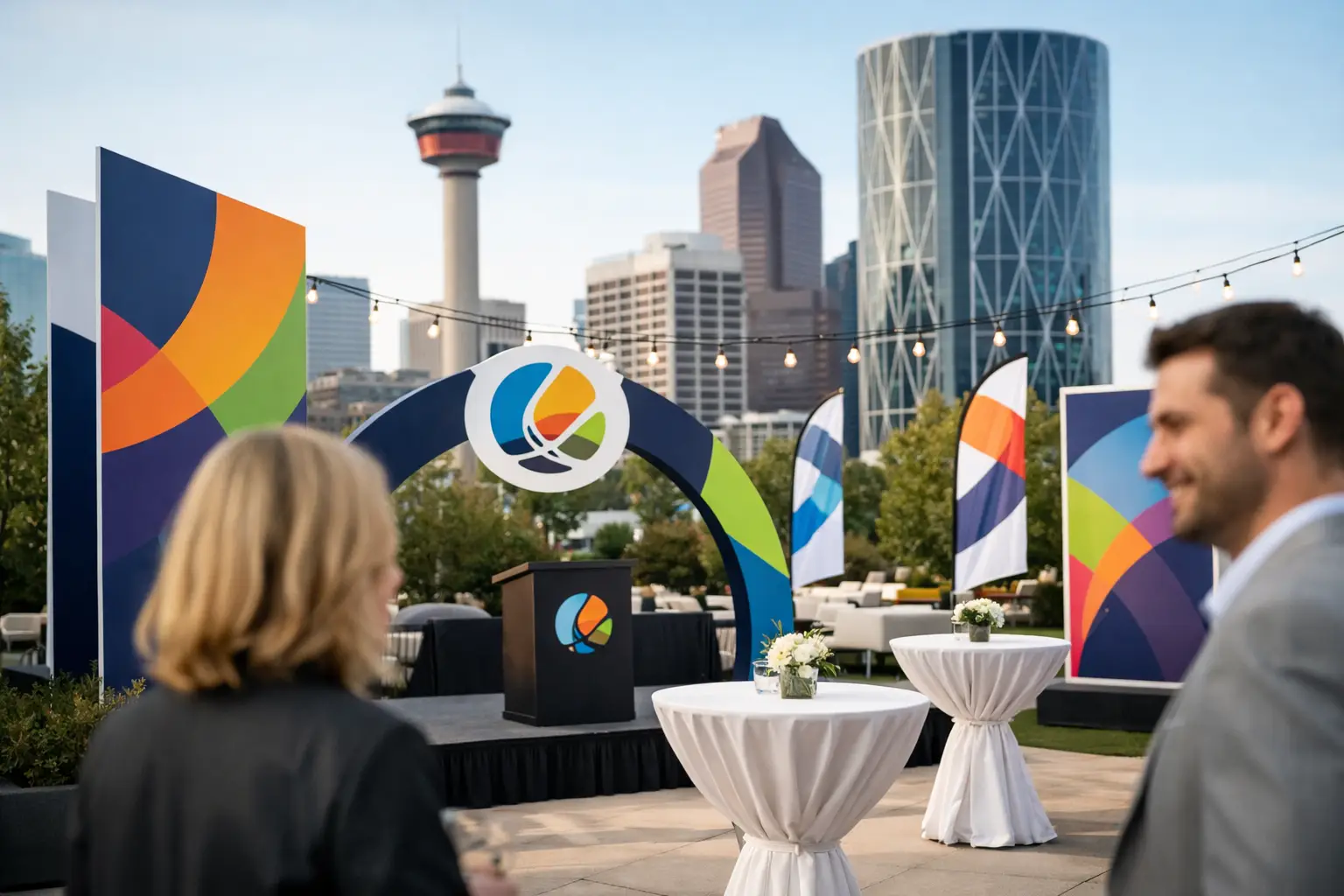
A guest can decide what kind of event they are walking into before they reach the registration desk. The invitation, event page, signage, lighting, name badges, screens, and even the first photo they see online all send a signal. Great event branding design Calgary businesses invest in makes that signal clear: this is professional, this is intentional, and this is worth their time.
For a launch, conference, gala, trade show, investor event, or client celebration, the room is not just a room. It is a live expression of your business. If the experience feels disconnected, people notice. If every touchpoint carries the same visual confidence, the event feels bigger, sharper, and more credible.
What Event Branding Design Calgary Needs to Do
Event design is often mistaken for decorating a venue. Décor has a role, but branding has a larger job. It must help guests understand where they are, what matters, where to go next, and why the experience is worth remembering.
The strongest work balances three outcomes. First, it creates recognition by making the event visibly yours. Second, it creates momentum by guiding people through the schedule, space, and key moments without confusion. Third, it creates shareable proof through photography, video, and guest content that continues working long after teardown.
That last point matters. A beautiful backdrop that photographs poorly, a sign with unreadable type, or a stage screen designed without considering camera angles can waste a major portion of the investment. Your event should work in the room and on the feed.
Build One Idea Across Every Touchpoint
A memorable event rarely begins with a collection of nice-looking assets. It starts with one clear idea. A technology company might frame its event around momentum and progress. A real estate team may want to communicate trust, place, and possibility. A nonprofit gala may need warmth, seriousness, and a powerful reason to give.
That idea should shape the visual system before anyone starts ordering banners. It informs the colour palette, typography, photography direction, motion graphics, materials, shapes, messaging, and environment. It also gives your team a practical filter: if an element does not support the central idea, it probably does not need to be there.
Start with the guest journey
Think through the event in the order your guests experience it. The journey begins with the save-the-date or social announcement, continues through registration and arrival, then moves through the venue, programming, networking, and post-event follow-up.
Each stage needs a purpose. Pre-event materials build anticipation and make registration easy. Arrival branding confirms guests are in the right place and sets the tone immediately. Wayfinding reduces friction. Stage design focuses attention. Digital assets keep remote attendees, sponsors, and social audiences connected. Follow-up visuals help the event hold value after the last guest leaves.
When one creative team owns the full journey, the work is more consistent and the handoffs are simpler. The invitation does not feel like it belongs to a different company than the stage, and the recap video does not look like an afterthought.
Design for the actual room
A concept can look excellent on a presentation board and fail at venue scale. Calgary event spaces vary widely, from hotel ballrooms and convention halls to galleries, warehouses, restaurants, show homes, and outdoor settings. Ceiling height, entrance placement, sightlines, lighting, screen sizes, installation rules, and crowd flow all change what good design looks like.
A high-contrast logo may be perfect on a phone screen but too harsh across a 30-foot backdrop. Fine typography can look premium in print but disappear from the back half of a room. A dramatic entry feature may be worthwhile for a product launch with media coverage, but unnecessary for a small leadership dinner where conversation is the priority.
The right answer depends on the event's commercial goal, venue realities, audience size, and expected content capture. Good design is never just about adding more. It is about putting the budget where people will feel it most.
Priorities That Make an Event Feel Complete
If the budget cannot cover every possible activation, focus on the pieces that shape both guest confidence and visual output. Four areas consistently carry the most weight:
- A strong arrival moment gives guests an immediate sense of place. This could be branded registration, an entry installation, a photo moment, or a simple but striking directional treatment.
- Clear wayfinding prevents small frustrations from becoming the story. Guests should be able to find check-in, washrooms, sessions, food, and exits without searching.
- A stage or focal environment creates the visual centre of the event, whether that is a keynote screen, presentation wall, product display, or awards area.
- Content-ready details such as branded photo backdrops, presentation templates, animated screen graphics, and thoughtful table elements make it easier to capture material your marketing team can use later.
Sponsors also need careful integration. Their visibility should feel valuable without turning the room into a patchwork of competing logos. Give sponsors defined, premium placements that fit the event system rather than placing marks wherever space happens to be available.
Calgary Details That Deserve a Plan
Calgary audiences are used to polished corporate events, major industry gatherings, community fundraisers, and high-energy launches. That creates an opportunity, but it also raises expectations. Generic roll-up banners and a last-minute slideshow are unlikely to create much impact in a competitive room.
Local conditions matter, too. Winter events require practical arrival planning, visible indoor direction, coat-check considerations, and materials that can handle slush and heavy foot traffic. Outdoor experiences need a weather-aware design approach, from stable signage to screen visibility in bright light. Large venues may require more wayfinding than expected, while intimate spaces need restraint so branding does not overpower the atmosphere.
Calgary is also a city where personal networks move quickly. A well-executed event can create real business momentum because attendees often include clients, partners, prospective hires, media, and industry peers in the same room. Every branded detail becomes part of the impression they carry into the next conversation.
Avoid the Fragmented Vendor Problem
Events become difficult when each asset is handled separately. One supplier produces signage, another designs digital screens, another manages photography, and someone else tries to adapt the logo for a custom build. The result can be inconsistent colours, mismatched dimensions, delayed approvals, and a lot of unnecessary coordination for the client.
A full-service creative partner can bring identity, event graphics, print-ready production files, display design, photography, video, motion, 3D visualizations, and digital event assets into one coordinated plan. That does not mean every event needs every service. It means the services are available when the concept calls for them, without forcing you to build and manage a long vendor list.
At Amydia, that flexibility is backed by a straightforward commercial approach: no commitments, no contracts, competitive pricing, and payment only when you are satisfied with the final result. For busy organizers and marketing teams, confidence in the process matters nearly as much as confidence in the final look.
Give Your Creative Team a Better Brief
You do not need to arrive with finished visual ideas. You do need to be clear about the business result. Is the event meant to generate leads, reward employees, launch a product, attract investors, raise funds, build community, or create content for a larger campaign?
Share the audience profile, venue, date, expected attendance, sponsor requirements, programming, budget range, and any non-negotiable brand elements. If you have a rough floor plan, photos of the venue, or examples of the energy you want, include those too. A clear brief lets the creative work move quickly without boxing it into generic choices.
Leave room for a recommendation that challenges the obvious. Sometimes the best move is a large visual statement. Sometimes it is a refined system with excellent lighting, clear navigation, and a focused content plan. The event should feel expensive where it counts, not busy everywhere.
The best time to think about event branding is before the venue fills with furniture, cables, and deadlines. Start with the feeling you want people to carry out the door, then build every visible moment to support it. When guests can recognize your brand, navigate the space, and capture something worth sharing without being asked, the event is already doing more for your business.

