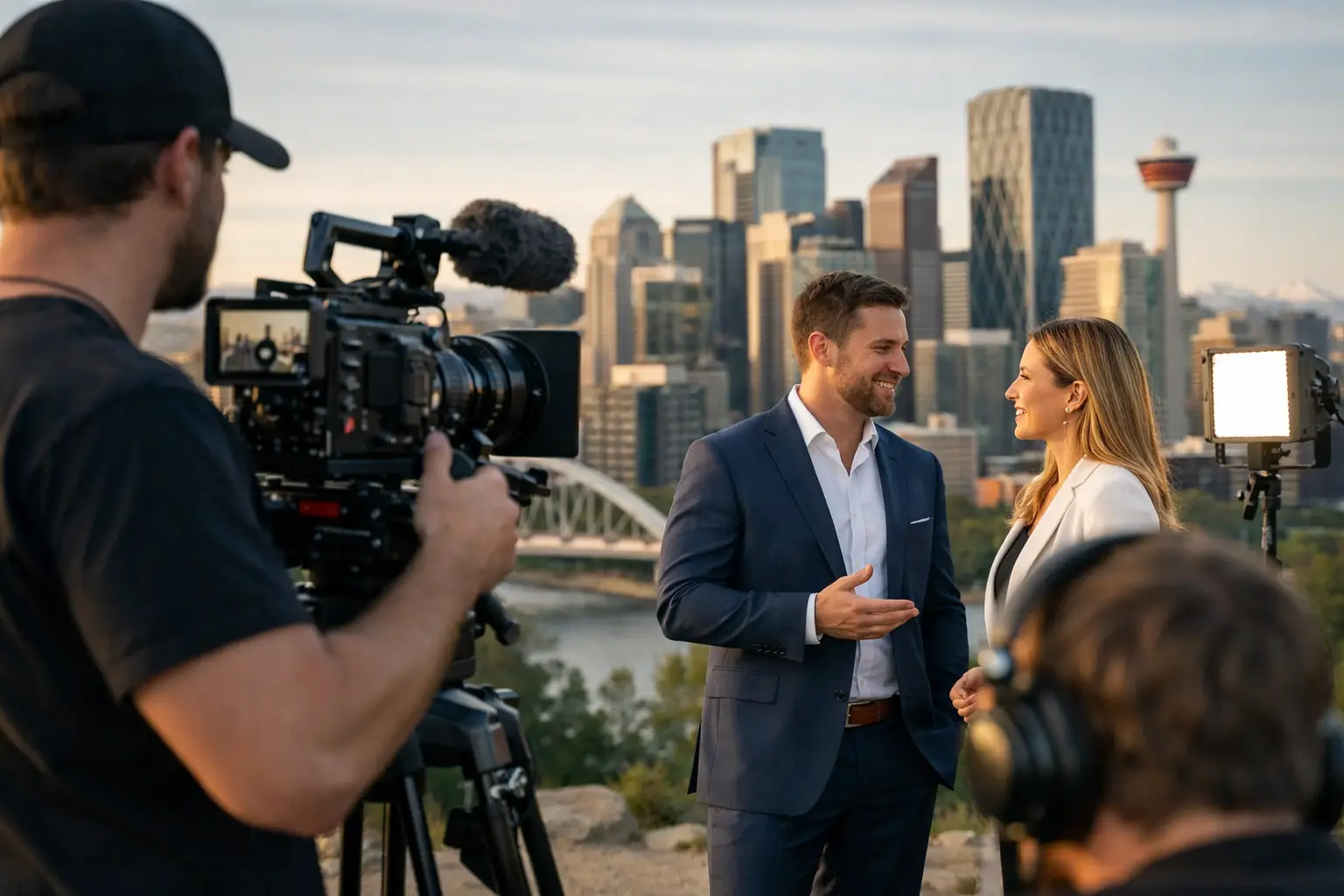
A 30-second video can decide whether a prospective customer stays on your website, books a showing, requests a quote, or scrolls past your business. That is why commercial video production Calgary companies invest in should not be treated as a nice-to-have. It is a sales and brand asset built to make a clear impression quickly, wherever your audience meets you.
For a Calgary business, the opportunity is bigger than producing one polished ad. The right video can give your website more authority, give your sales team a stronger opening, make paid campaigns more credible, and create months of useful social content from a single production day. The goal is not simply to look cinematic. The goal is to make the next business decision easier for your customer.
What Commercial Video Production in Calgary Should Accomplish
A commercial video has a job to do. It may need to explain a complicated service, prove the quality behind a product, introduce the people clients will trust, or make a new development feel real before construction is complete. The format changes, but the test stays simple: does the viewer understand why your business is worth choosing?
Strong production begins with that answer, not with a camera package. A high-end restaurant may need atmosphere, craft, and appetite appeal. A commercial real estate team may need scale, location context, and clean visual proof. A technology company may need to make an abstract offer feel practical in under a minute. Each requires a different story, pace, location, and visual language.
The most effective work avoids trying to say everything. It finds the one message that earns attention, supports it with specific proof, and gives the viewer a sensible next step. That discipline is what separates a useful commercial from attractive footage with no commercial purpose.
Start With the Buyer, Not the Shot List
Before production begins, get precise about who needs to act after watching. A founder pitching investors does not need the same video as a property manager trying to fill a building. A customer comparing local service providers needs different information than an existing client considering an upgrade.
This is where many video projects lose momentum. Teams begin by collecting references, discussing drone shots, or debating music before agreeing on audience and outcome. Those details matter, but they should support the message rather than drive it.
A productive creative brief can be simple. Define the audience, the action you want them to take, the strongest reason to believe your claim, and the places the video will appear. A website homepage, a trade-show screen, Instagram, LinkedIn, a proposal deck, and a pre-roll ad all place different demands on length and structure.
It also helps to decide what success looks like before filming. For some businesses, success is more qualified leads. For others, it is higher conversion on a product page, increased event registrations, better recruitment applications, or a sales team that no longer has to explain the same thing from scratch. Clear expectations lead to clearer creative choices.
Build One Shoot Around Multiple Uses
A good production day should create more than one finished file. The strongest commercial video strategy plans for a library of assets from the beginning, without turning the shoot into an unfocused content grab.
Your main brand or campaign film might run 60 to 90 seconds. From the same concept, you may also need short vertical clips for social platforms, a silent captioned version for mobile viewing, a website header edit, customer testimonial cutdowns, product details, and still photography for ads or landing pages. Planning these deliverables early affects framing, interview questions, shot coverage, and how locations are scheduled.
This is particularly valuable when you are launching a new identity, website, campaign, or property. Video works harder when its look, language, graphics, and photography belong to the same brand system. A customer should recognize your business whether they encounter a three-second social clip, an event display, or a full website presentation.
There is a trade-off. More deliverables require more planning and a broader post-production scope. But it is usually more efficient than commissioning disconnected content every few weeks. The smart approach is to prioritize the core assets first, then build practical variations around them.
The details viewers notice
People may not describe why a video feels credible, but they notice when it does not. Audio that is hard to hear, generic visuals, rushed pacing, poor lighting, or a message that takes too long to arrive can make a capable company appear less established than it is.
Quality is not only about using premium equipment. It is about control. The right location, natural performances, thoughtful direction, accurate brand graphics, sound design, colour, and editing all work together to make a business feel considered. For product-led brands, close-up detail can communicate quality better than broad claims. For service businesses, clear interviews and real workplace moments often create more trust than scripted lines.
Calgary Gives Your Story Range
Calgary is a city of distinct business environments: downtown offices, industrial facilities, hospitality spaces, construction sites, residential developments, professional services, retail, energy, technology, and major events. That range is useful because your video should reflect where and how your business actually delivers value.
A location should not be chosen only because it looks impressive. It should reinforce the story. A bright studio may suit a product launch. A working site may provide proof for a construction or logistics company. A real client-facing environment can make a service brand more believable, provided the space is prepared and permissions are handled properly.
Weather and season also matter here. Winter exteriors can look sharp and distinctly local, but shorter daylight and unpredictable conditions may affect a schedule. Summer offers longer shooting windows, while busy event seasons can make locations harder to secure. Experienced planning accounts for these variables instead of treating them as last-minute surprises.
Choose a Partner That Can See the Whole Campaign
The best production partner does more than show a reel. They ask useful questions about your audience, campaign, timeline, approvals, brand standards, and how the final work will be used. They can turn a broad idea into a clear creative direction without burying you in technical language.
Look for a team that can handle the full path from concept through filming, editing, motion graphics, and final formats. If your campaign also needs a landing page, product photography, 3D visuals, event materials, or a refreshed identity, coordinating those pieces through one creative partner reduces friction and protects consistency. It also means fewer handoffs, fewer mismatched files, and fewer conversations lost between separate vendors.
Transparency matters just as much as creative range. Ask what is included, how revisions work, who owns the final assets, and which formats you will receive. A lower initial quote can become expensive if it excludes essential edits, sound, graphics, or platform-specific versions. On the other hand, not every project needs a large crew or elaborate set. The right scope depends on the audience, the message, and the commercial value of getting it right.
Amydia brings video, brand, digital, photography, 3D, and campaign production together for businesses that need more than a standalone deliverable. There are no commitments or contracts, and clients only pay when they are satisfied with the final result. That is a practical model for companies that want ambitious creative work without being boxed into an agency relationship.
Make the First Seconds Earn Attention
Most viewers will decide quickly whether a video is for them. Open with the product in action, a striking result, a familiar customer problem, a human moment, or a confident statement that immediately frames the value. Save slow logo reveals and background explanations for later, if they belong at all.
Then give the audience something concrete. Show the finished space. Demonstrate the process. Let a customer or team member speak with specificity. Put the product where it is used. Strong commercial video does not rely on vague superlatives when it can provide visual evidence.
The final frame should make the next move obvious. That may be booking a consultation, viewing a collection, requesting a quote, attending an event, or speaking with your team. A clear call to action is not pushy when the video has already earned interest. It simply gives the viewer a place to take it.
Your business already has stories worth showing: the work behind the scenes, the detail customers receive, the scale you can deliver, and the people who make the promise real. Give those stories a clear purpose, a strong visual standard, and enough room to be seen in the places your next customers are already looking.

